
Does Discipline Really Equal "Freedom"?
The pros and cons of doing the same thing, over and over again.

Every morning, my iPhone alarm goes off, and I shoot up like a bat out of hell.
Within a few minutes, I come to, get up, drink water, and make a coffee.
I don’t wait 90 minutes before my first coffee like a good self-improvement bro, but I do usually manage to make it a whole 20-25 minutes because I let the dogs out and make my coffee for my wife first.
Then, I go to my computer, and I write things, work on projects, and do a lot of other boring work that you probably wouldn’t want to hear much about. At some point, I have breakfast.
Then, I go to Jiu-Jitsu practice. Then I have lunch.
Then, I hang out with my wife, read, work a little more, and then I go either back to Jiu-Jitsu practice or to the weights gym. I come home, get in my racing simulator for 30-45 minutes, have dinner, watch a show with my wife (currently 100 Years of Solitude on Netflix, a solid show but a great book), and go to bed around 10:30.
Most of the time, life these days is not “exciting” in the way you might think.
I’m not flying to a new city every weekend to do a seminar or compete.
I’ve just been living a disciplined, normal life.
It’s been amazing.
Today, let’s talk about the pros and cons of discipline.
The cons.
The most difficult parts about living a disciplined life are the side effects of not straying from the discipline:
FOMO
Pressure
Luckily, there’s a way that we can deal with both of these thoughtfully.
For me, I’m lucky in that I have lived an exciting life for many years. Although not for a long period of my life, I had a time when I was going out with people, drinking, smoking weed, and getting into trouble. I also have had periods where I was traveling the world constantly, living out of a suitcase, and chasing a dream.
“FOMO” (or the fear of missing out) is basically just the feeling that everyone else is doing something better than you or cooler than you, and that if you chose differently in your life, you’d be happier.
Social media exacerbates FOMO and comparison. It detaches us from the everyday beauty around us. People get so caught up in what they could be doing that they forget the beauty of their day-to-day.
Simple mindfulness and gratitude are the main ways to deal with FOMO.
But the pressure of discipline is the hard part for me.
If I get injured and am forced away from training, I feel like a shell of myself. If I can’t write one morning, my entire day feels jumbled. If a week comes where I can’t write this newsletter, I’ll feel like I’m letting myself down, much less the loyal readers of this lovely newsletter.
But you know what’s funny?
The way you deal with pressure is actually pretty much the same way you deal with FOMO.
You need to be grateful for where you are. You need to pause and breathe.
It’s ironic to me how many of life’s problems can be alleviated by literally just touching grass and refocusing your mind on the now.
The pros.
I struggle to go all the way into the “self-improvement” world.
I’m all for being healthy, but I probably won’t ever wait 90 minutes before the morning coffee that I’m already thinking about before I go to bed each night. I probably won’t cut out booze entirely (because sometimes, it really is a lovely day for a Guinness).
While there are times to do this, I find too much rigidity can be a slippery slope, in my opinion, to turning people more into slaves than into better versions of themselves. There’s a difference, for example, between being someone who doesn’t drink because they have a drinking problem (something that runs in my family) and being someone afraid of booze because they read a study about how it affects REM sleep.
I do believe that a key part of discipline is not just the ability to stay on the path, but the ability to stray from it and always find your way back.
But for a moment, let’s talk about the path and why it matters.
I started doing Jiu-Jitsu in 2015. I’m decently athletic but not the best in my division, yet my commitment and discipline in the sport have gotten me invited to the ADCC Worlds twice now. My discipline to write has helped me build the most popular Substack in the Jiu-Jitsu niche in the world.
Commitment and consistency in my relationship have helped me build a loyal and beautiful bond with the love of my life. Simply staying in touch with my friends has helped me maintain some friendships even since childhood. Discipline with reading over the last 8 years has helped me read many of the best books ever written.
Discipline is, in my opinion, the key to excellence in everything worthwhile in this life.
Closing Thoughts
Most people overestimate how much they can do in a day and underestimate how much they can do in a year.
While we tend to think about this in terms of good things (you can’t write a book in a day, but with insane discipline you could write 2 in a year), it’s also true with many vices.
The point is, I guess, that your life is a product of your habits. Every habit has consequences.
In my 20s, for example, I was obsessed with being the best grappler that I could be. I stopped going out with friends so I could hit extra training sessions. I invested all my money in the sport, meaning I had no money to see my non-Jiu-Jitsu friends anymore.
I lived a very “Spartan-like” existence for years, and it paid off in both ways.
I got really good at Jiu-Jitsu — good enough to make a living with it. I also lost most of my friends from that period. We just grew too far apart.
My discipline was excellent, but all choices have a price. I guess that is the hard truth about “discipline”:
Discipline doesn’t ask about your priorities, your beliefs, or what you truly want. It simply gives you a compounded version of the choices you’re making.
My goal going forward, at least, is to make choices in this next era of my life that won’t cost me the beautiful people I have around me now.
The Grappler’s Diary is sponsored by the Tap In BJJ App!
I’ve already told you about how Tap In is your everything app for Jiu-Jitsu.
This app allows you to:
Connect with training partners
Tap into your gym
Find training on the road
And much, much more.
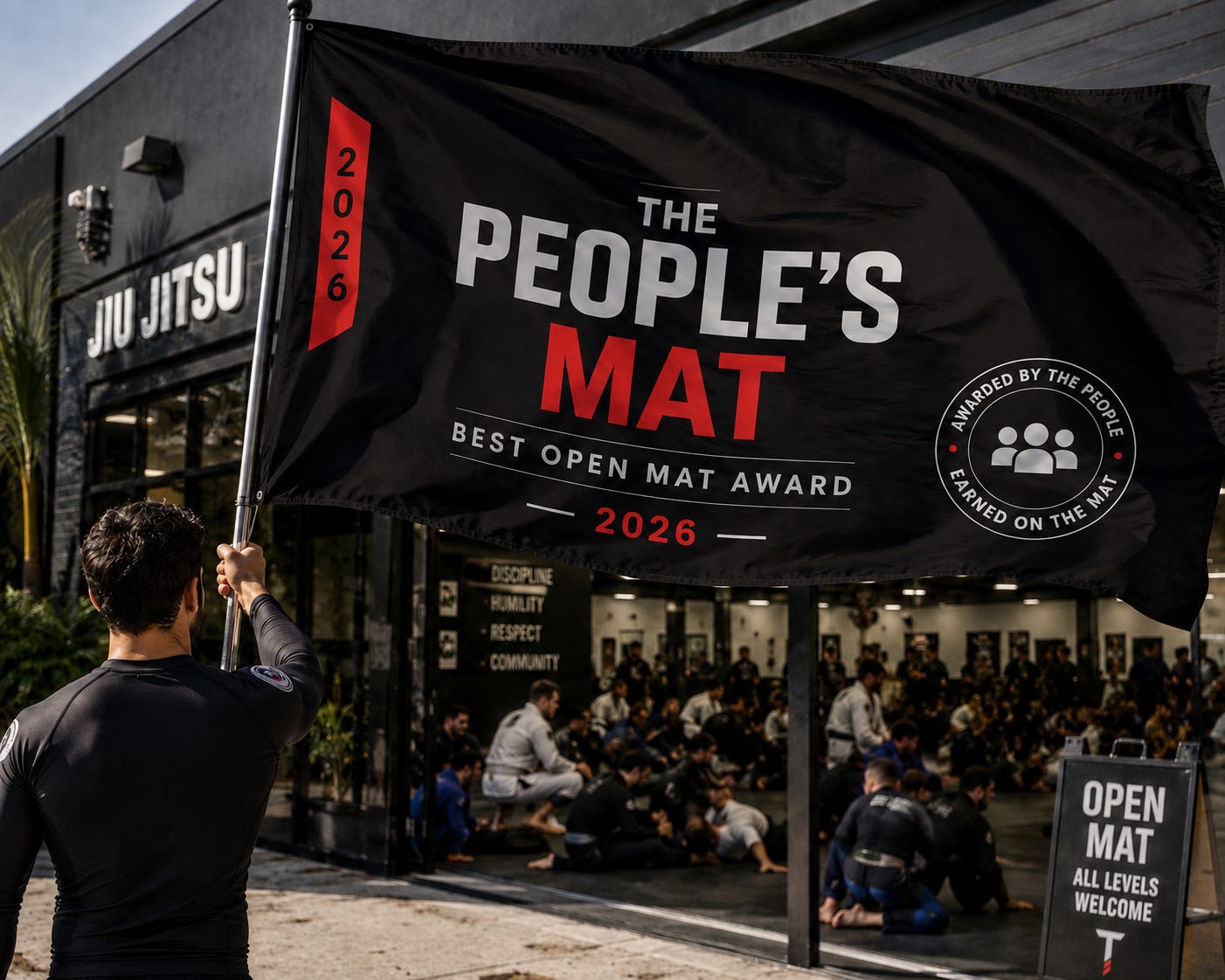
But right now, Tap In is running their first-ever “People’s Mat’ contest. The premise is simple:
Who has the best open mat in America?
All you have to do is hit this link and comment your favorite open mat. The top 4 will be announced August 21, and they’ll be running an undercover operation to help the public determine the true winner.
The winning gym will receive:
$1000 in gym upgrades
The official People’s Mat flag
Bragging rights as the people’s choice for the best open mat in America
Seems pretty cool to me.
Again, hit this link to vote and name your favorite gym.
And if you haven’t downloaded Tap In yet, hit this link to do that ASAP.
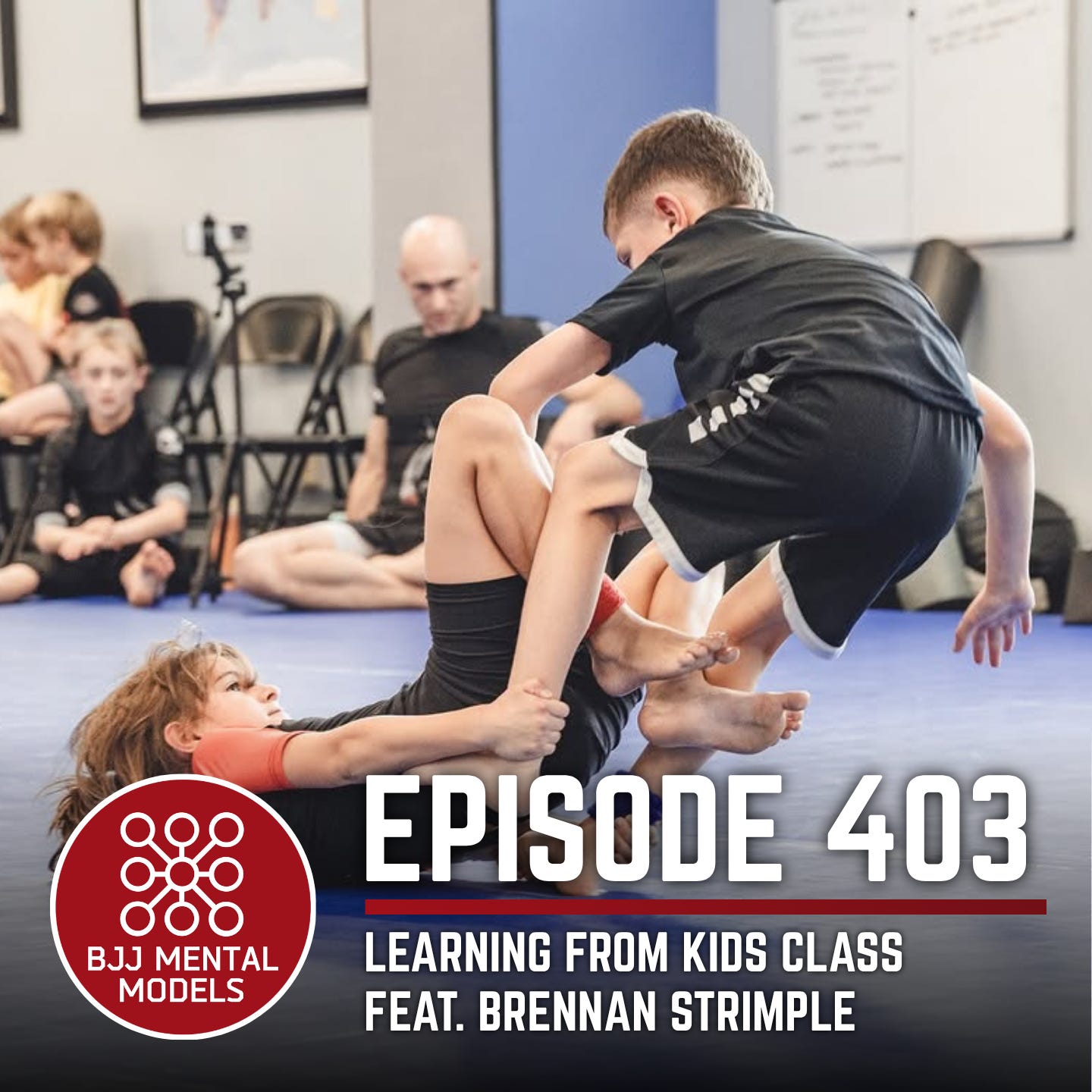
The Grappler’s Diary is sponsored by BJJ Mental Models, the world’s #1 jiu-jitsu education podcast!
In Episode 403, Brennan Strimple joins Steve Kwan to explain why you cannot run your kids program like a little adult class: kids don’t grapple like adults, they have their own problems, and the moves they need are different because the problems are different.
🤼 Kids don’t need a guard pass: They have so little guard retention that a guard pass isn’t a thing for them, and they get caught in the weeds trying to do moves instead of just getting to side control or mount. They grab each other in headlocks from every random position you could possibly imagine, so Brennan works headlock escapes where an adult beginner would be learning side control escapes.
🎯 Tasks and goals come before techniques: Brennan quizzes his kids every class on what they’re supposed to do from a position, and when they answer frame or shrimp, he tells them, “Those are tools to get the job done. But what is the job?” Escape, pass, sweep, submit, take down: once that framework is done, he starts giving them tools to accomplish their tasks.
📊 Kids have to understand when they’ve won and when they’ve lost: Adults inherently know that being on top of the fight feels good and being under someone’s body weight feels bad, but kids don’t necessarily know that. Brennan uses reversals as points, not just sweeps, and pretty soon their matches start to look the way we expect a jiu-jitsu match to look.
⏱️ Kids are running three to five seconds behind: A kid knows to sprawl, but they don’t remember they need to sprawl until it’s too late, so the sprawl is absolutely ineffective. Brennan says the kid can’t process what you’re saying because it’s too much information, so he ties his commands to one- to two-word things and repeats them.
🎮 The tap is a respawn: Kids hate losing, so rather than tapping, they start screaming, and if they refuse to tap and get hurt, they come into the next respawn with half their life meter already taken down. Brennan teaches them that when they respawn, they come in with full health, ready to fight the final boss again.
🎧 Hit this link to listen now.
Also published this week:

Thank you for reading another edition of The Grappler’s Diary!
If you enjoyed reading this article, share it with friends! Or, click on the ❤️ button on this post so more people can discover it on Substack.