
Harsh Lessons On Confidence
Something I've struggled with for as long as I could remember.

I was pretty timid as a kid.
Even as an adult, while I don’t quake in my boots every time I meet a new person anymore, I still don’t think anyone who knows me would consider me to be loud.
Hell, I’m a writer. Most of my work involves sitting behind a computer screen away from people.
If it performs well, this article will probably be read by a few thousand people, and while that is really cool and I’m grateful for every one of you, if I had to give a talk and share this message with you all in real life at once, I guarantee I’d have at least one panic attack.
Confidence is something I have struggled with since I was a kid. Because of that, it’s also something that I’ve worked on tirelessly. I’ve read all the books, from How to Win Friends and Influence People to The Subtle Art of Not Giving a F*ck to Meditations, but all I’ve really learned from the books is that learning is not the same as doing. Reading does not equate to training — on the mat or in your mind.
I started with a predisposition to be unconfident, and I’ve learned a few things to get to where I am today. While I am not blindly confident, I’ve gone from someone who was scared to even say hello to strangers to someone who’s published a book, traveled the world competing in Jiu-Jitsu, and has taught Jiu-Jitsu in countries where there’s a language barrier.
Today, we’re talking about confidence, sports, and how to get over yourself, not once and for all, but over and over again.
Confidence starts with simply doing hard things.
I’ve always thought of strength as the ability to transcend pain.
Confidence is the ability to transcend fear.
On the mat, one way that we can improve our confidence is by starting in bad positions. When you have spent hours with someone starting on your back, you won’t fear it happening in a competition as much. When you’ve done dozens of hard wrestling rounds or leg lock rounds with dangerous training partners, you will feel more confident in those areas.
But this lesson goes beyond the mat. It’s not about Jiu-Jitsu or sports, it’s about dealing with objectively scary things.
Sitting in a hot sauna for a long time makes you realize that your body can handle extreme heat. Dunking yourself in a cold plunge isn’t so bad once it’s over. Sprints on the airdyne bike only really suck in the moments before when you’re dreading them (you don’t really think when you’re doing them, and you feel too good afterward to care).
Enduring difficulty is the foundation of confidence.
If you are a particularly timid or anxious person, as I have always been, the first thing I would recommend is simply doing difficult things. The important thing to remember is that it always has to be difficult for you.
If saunas are easy for you, you can’t do them. If leg locks are easy for you, training them is not getting out of your comfort zone.
You need to get out of your comfort zone to build true confidence.
But athletes need even more confidence.
I say “athlete” because I’m an athlete and most of the people reading my writing these days are athletes in some capacity, but it goes deeper than that.
If you want to be an exceptional performer, you need an exceptional level of confidence.
I hate when we make it seem like athletes are better than normal people (putting people on a pedestal is never a good idea in my experience), but when it comes to confidence, most elite athletes do tend to have more than most normal people.
But what makes athletes more confident than normal folks?
Is it an inflated ego? Maybe.
Is that a bad thing? Off the mat, perhaps.
But nonetheless, when you are finding yourself in a competitive setting (sports, business, dating, etc), you need to have a lot of confidence. Your confidence needs to match the level of your ambition.
If it doesn’t, you’re really only a few setbacks from knocking yourself back down to where you once started.
My journey with confidence.
As I said in the intro, I wasn’t naturally confident.
Everyone in my family deals with pretty severe anxiety. Years ago, I experienced something called “derealization” as a result of my anxiety. I will likely do an article on this soon, as I have been thinking about that experience a lot of late.
It was quite a journey to go from getting the sense that my life was “unreal” to feeling not only confident in reality but in my ability to succeed in reality.
But what I learned from having all of my confidence and belief in myself shattered was this:
You cannot have true confidence when you are secretly lying to yourself.
If you haven’t earned the right to be confident, you won’t be confident. If you haven’t trained to the best of your ability, your doubts will use this as fuel. If you haven’t studied for your test, you ought to be worried about it.
Confidence comes from fully believing that you have done the best of your abilities. You have done the best that you can do with what you have.
Visualization, meditation, and all of these other techniques that we have are great, but they’re just components of the essential overarching idea here:
You need to earn the right to be confident.
Confidence is like cardio. You build it like training, and if you don’t nurture it, it goes away.
Closing Thoughts
I’ve reached an interesting point in my Jiu-Jitsu career.
Back in the day, the way I’d build my confidence for competition was simply just competing more. It’s like riding a bike.
But of late, I haven’t been as active in competition. It’s hard right now.
I’ve talked about this a bit, but whatever the cause, I know that because I’ve been a bit less active, I will feel the pre-competition anxiety a bit stronger next time I get out there.
But what I have now, thanks to mental training over the last 8 months, is a new set of tools that I can use and skills that I have built that help me center myself, lock in, and perform to the best of my ability.
What’s cool is that simply having these tools does wonders for the anticipation of the anxiety to come. Instead of dreading the next opportunity, I’m just excited to test what I have learned.
And that’s the last point I want to make on confidence today:
Every test in your life is just another opportunity to display what you know. If it doesn’t work out, it’s really not that serious. Whatever the results, you keep moving forward.
Confidence is the ability to keep doing hard things, no matter what data the world is giving you.
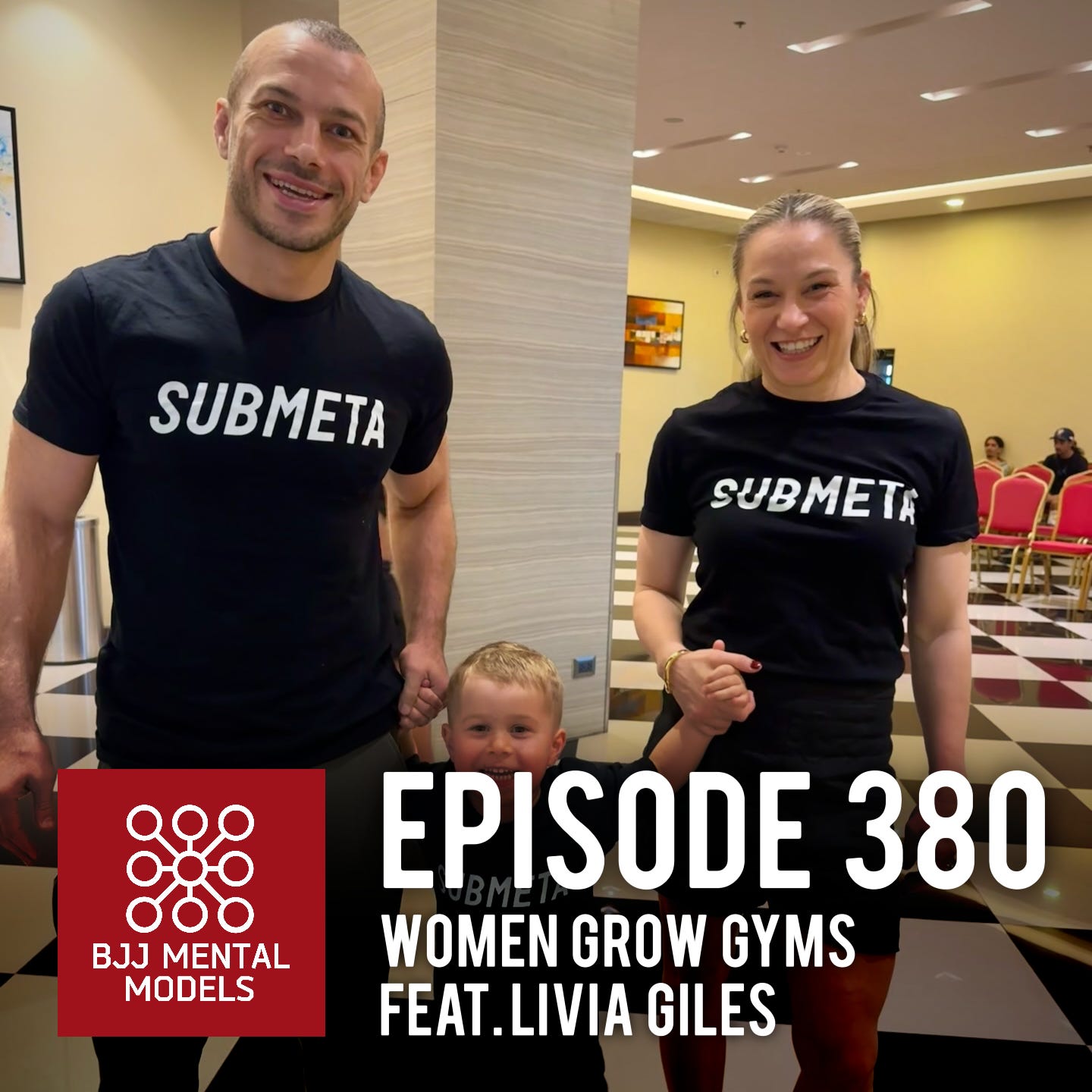
The Grappler’s Diary is sponsored by BJJ Mental Models, the world’s #1 Jiu-Jitsu education podcast!
In Episode 380, Steve Kwan sits down with Livia Giles (elite competitor, coach, and co-founder of Submeta) for a frank conversation about making Jiu-Jitsu better for women.
🚪 Start With the Basics: No women’s changing room? Don’t expect women to stay. Physical space is the first signal that women are actually welcome.
👩🏫 Put Women at the Front: Female coaches in mixed classes lower the barrier for new members and normalize women’s presence from day one.
🚩 Trust the Red Flags: Small warning signs on the mats tend to predict bigger problems. Protecting your gym’s culture matters more than giving people the benefit of the doubt.
🤝 Men: Just Be Normal: Treat female training partners like any other partner. Call out friends when they don’t.
💬 Speaking Up Works: Women shifted film industry culture by speaking up. The same can happen in Jiu-Jitsu. Support the people putting themselves on the line to make it happen.
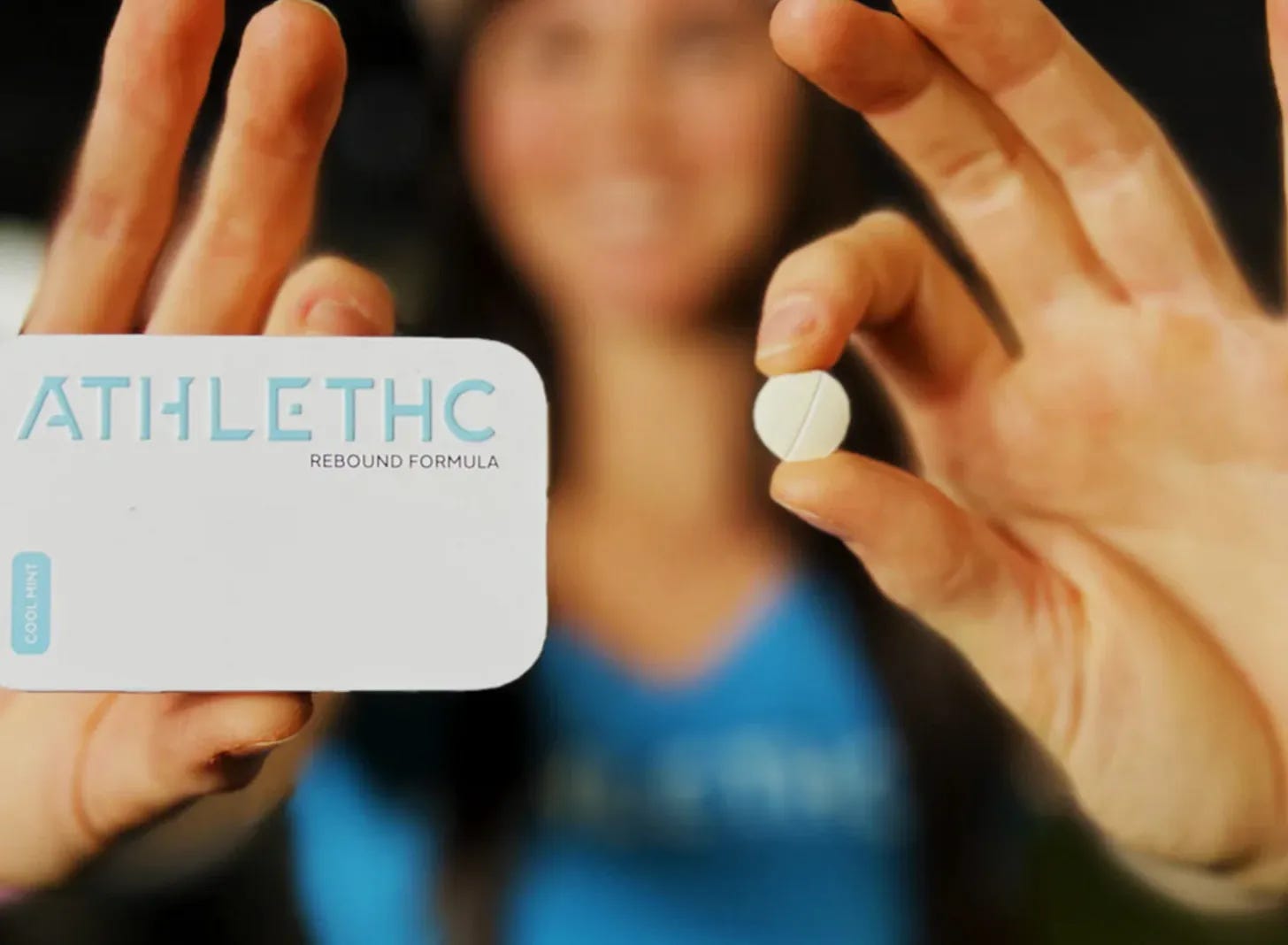
The Grappler’s Diary is also sponsored by ATHLETHC!
ATHLETHC is the world’s first THC mint that is designed with performance in mind.
As an athlete, writer, and teacher in Jiu-Jitsu, I’m often stressed out, burnt out, and beaten up by my lifestyle. I’m constantly on the road, constantly pushing myself, and at times, on the brink of a collapse.
When you’re at your limits, you need rest, not some magic pill. However, what ATHLETHC’s Rebound mint does for me is that it helps facilitate that deep rest. It literally chills me out.
ATHLETHC’s Rebound Formula mint is a powerful blend of THC, CBC, and CBD. It helps with sleep, decompression, and alleviating muscle soreness. It’s the recovery tip you probably have needed for a long time.
Also published this week:
Thank you for reading another edition of The Grappler’s Diary!
If you enjoyed reading this article, share it with friends! Or, click on the ❤️ button on this post so more people can discover it on Substack!