
Why Do Bad Things Happen?
And other things I don't know.

“It was the best of times, it was the worst of times.” — Charles Dickens
One of my favorite novels is A Tale of Two Cities by Charles Dickens.
The quote above is the opening line from the novel. It was one of those books that I read in high school, and I thought it was stupid and I didn’t get it, but when I revisited it as an adult a few years later, I was hooked immediately. I remember going on long walks at night through Austin when I first moved and listening to the book. I remember myself feeling the contradiction that the story highlights — “the best of times and the worst of times” — within my own life.
When I first moved to Austin, it was the best of times. I was enjoying a lot of Jiu-Jitsu progress. I had just met the woman who would become my wife. There were a lot of new beginnings, but I still had the freedom of youth. My body was healthy, I had a lot of time to write and opportunities to compete, and training was good.
But to be transparent with you, it was also the absolute worst of times.
I was broke. I kept losing at the ADCC Trials because I’d either make a dumb mistake, lose a tight ref’s decision, or just gas out because I didn’t train properly (because I couldn’t be home; I had to travel to make money).
My point of this is not to write a sob story. I am very lucky. But at the time, I didn’t feel very lucky.
My point here is that life is a lot like the scene described in the opening of A Tale of Two Cities. Life is full of contradictions.
Today, we’re going to figure out why bad things happen.
Every good comes with bad.
All of the best moments in my life seem to have either been immediately preceded by some of the worst moments.
And vice versa.
In 2024, before I had the high of being invited to ADCC, I was contemplating quitting Jiu-Jitsu and moving back to Chicago because my move to Austin to become “a pro grappler” had seemingly been a failure. After getting the invite, I injured my back and had about a month where I was depressed, miserable, and unable to train for what was then the biggest tournament of my life. Then, I got through that, made my way back to the mat, and had a huge performance that changed my career.
In 2025, I was riding high. I was doing seminars, finally making a profit with my silly little sport, and I won my debut match at Who’s Number One. Then, I went to Kazakhstan to compete, and I got armbarred in about 20 seconds. Immediately after that, I got a pretty bad injury in my elbow (not even the elbow that got armbarred), and I struggled for 2 months. I was basically unable to train for what became the next biggest tournament of my life, the Craig Jones Invitational.
In the end, I got a cortisone injection, I competed (although not very well), and we won life-changing money. What had been the hardest summer I’ve had probably since moving away from home my senior year of high school was rewarded with enough money to pay for my wedding and eventually build my first Jiu-Jitsu academy.
More on that soon, however ;)
What followed the high of CJI was months of struggle. I couldn’t get booked to compete because promoters thought I was boring, I was constantly living out of a suitcase doing seminars, and I was training my ass off to “reinvent myself” as a grappler.
In December, I got invited to compete at WNO, and I won. That was good. Then, I had to lose about 20 pounds to compete at Polaris the following January. That was kind of bad. Then, I competed, and my fiancé and I did a European seminar tour together. That was good. Then, my nephew passed away. That was horrible. Then, my wife and I got married. That was amazing. Then, we moved. That was bad at first (saying goodbye to our friends) but then very good (saying hello to our new life here in California).
And I guess, all of this is to say…
Things happen — we make them good and bad.
I hate to strip the passion from what has been an emotional few years, but for today’s purpose, it’s necessary.
It would be a lie to say that there weren’t a lot of emotional outbursts over these last few years. Tears of joy. Tears of sadness. Moments where I pump my fist in the air in celebration like John Bender at the end of The Breakfast Club. Moments where I wallow in isolation (I like to call it “voluntary exile”) like Bruce Wayne in between The Dark Knight and The Dark Knight Rises.
In the words of Epictetus:
"Man is disturbed not by things, but by the views which he takes of them".
And look, I hate just as much as you do that I’ve become that guy who’s dropping Stoic quotes in his newsletter, but I wouldn’t do it if I didn’t wholeheartedly believe that these words are helpful.
I think a lot of people confuse being stoic with being unemotional. This is not how I’ve experienced it. It’s impossible not to feel emotions. You are human. People are going to fire you from work, cut you off in traffic, and yell at you on the phone.
But when we think of people in stories who make it through tough times, it’s not because they are unemotional. It’s because they feel those emotions and don’t stop doing what needs to be done. A hero or a leader is not a statue; it’s someone who allows themselves to be defined by what they do, not what they feel. It’s acting based upon what is right, not what is convenient or your short-term impulses.
The reason I told you the story of all my ups and downs above is not because I think I’m some hero who you should try to be like. My point is that ups and downs are never going away. I will always have them. You will always have them.
Strength is the ability to keep moving forward despite whatever is in your path. It’s not to remove your emotions, block them out, and allow whatever monster builds when you ignore them to take hold.
It’s about feeling your “feelings” but not allowing them to sway you from doing what you know is right. What you know needs to be done to achieve the goal, to maintain your code, and to live in a way that you know you won’t be unable to look yourself in the mirror afterward.
Closing Thoughts
When things get bad, it’s easy to wonder why.
Why did I get passed up for that opportunity?
Why did I lose?
Why did I have that personal failure?
We blame ourselves. We blame others. We stress and worry about why, as if knowing why will make it go away.
But truth be told, most of the time, “Why?” is not helpful. Sometimes, it can help you learn how not to do what happened that was bad again, but beyond that, it is largely an unhelpful question. This is why I was never a philosophy major. At a certain point, I just got sick of asking “Why?” to everything, and I wanted to start doing things.
Truth be told, a good life is lived. It is not pondered, it is not dreamt up, and it’s not defined by just what happens to you or against you.
Bad things happen because, well, I don’t know why. I have my opinions, of course, but at a certain point it just seems like things happen because they happen. Life goes on.
The more important problem to focus on, rather than “Why am I struggling?” is “What can I do about this struggle?”
Sometimes, hard work is what you can do about it. Sometimes, it’s readjusting your approach. Other times, it’s just knowing that it’s okay to not be okay.
My point is, I guess, that the real skill is knowing what each situation you encounter calls for. That’s a little bit like Jiu-Jitsu.
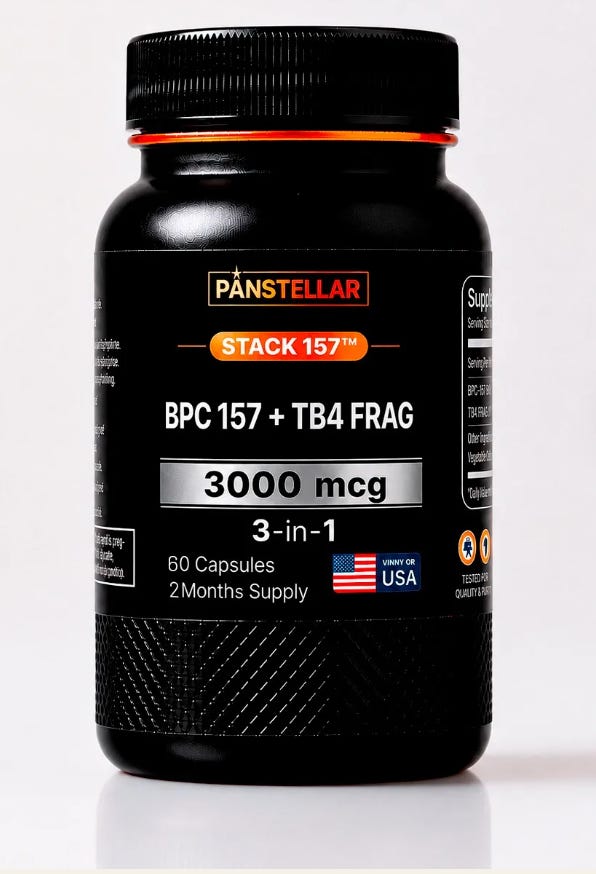
Accelerate Mat Recovery: High-Bioavailability STACK 157 (BPC-157 + TB-4 Frag) for Grapplers
Every grappler knows the toll that Jiu-Jitsu takes on the body—tweaked joints, muscle tears, and chronic inflammation are practically part of the lifestyle. To stay on the mats long-term, standard recovery protocols aren’t always enough.
That’s why Panstellar engineered the ultimate cellular repair protocol for high-intensity athletes. We specialize in premium BPC-157, a powerful peptide compound renowned for accelerating tissue repair, protecting tendons, and drastically reducing systemic inflammation.
Taking it a step further, their brand-new formula combines BPC-157 with TB-4 fragment: STACK 157. Unlike standard BPC capsules on the market that struggle with gut degradation, our advanced formulation delivers maximum oral bioavailability. This means faster, more efficient absorption directly to your muscles, ligaments, and joints, allowing your body to trigger deep cellular healing exactly where it’s needed most.
Don’t let injuries or nagging pain dictate your training schedule. Upgrade your recovery with the most bioavailable peptide protocol available and roll pain-free.
👉 Get 15% OFF STACK 157 – Shop Panstellar Today (Note: Use code grappler at checkout)
When I was younger, I got the Jiu-Jitsu bug.
Around the same time, I got the travel bug.
I found myself constantly traveling, constantly doing Jiu-Jitsu, and typically ending up in places where I didn’t know anyone, didn’t have a car, and also didn’t have a lot of money.
I never knew where to go so that I could train, and I always ended up spending lots of money on Ubers, drop-in fees, and, if I wasn’t careful, paying to wear a gi or uniform at some gym that, had I known they had weird policies, I wouldn’t go to to begin with.
The hardest part about traveling to tournaments was finding a place to get a workout in after getting off the plane that wasn’t a cult and simultaneously wasn’t going to shark tank me because they found out someone was in town for the local IBJJF tournament that weekend.
If only Tap In had been a thing back then.
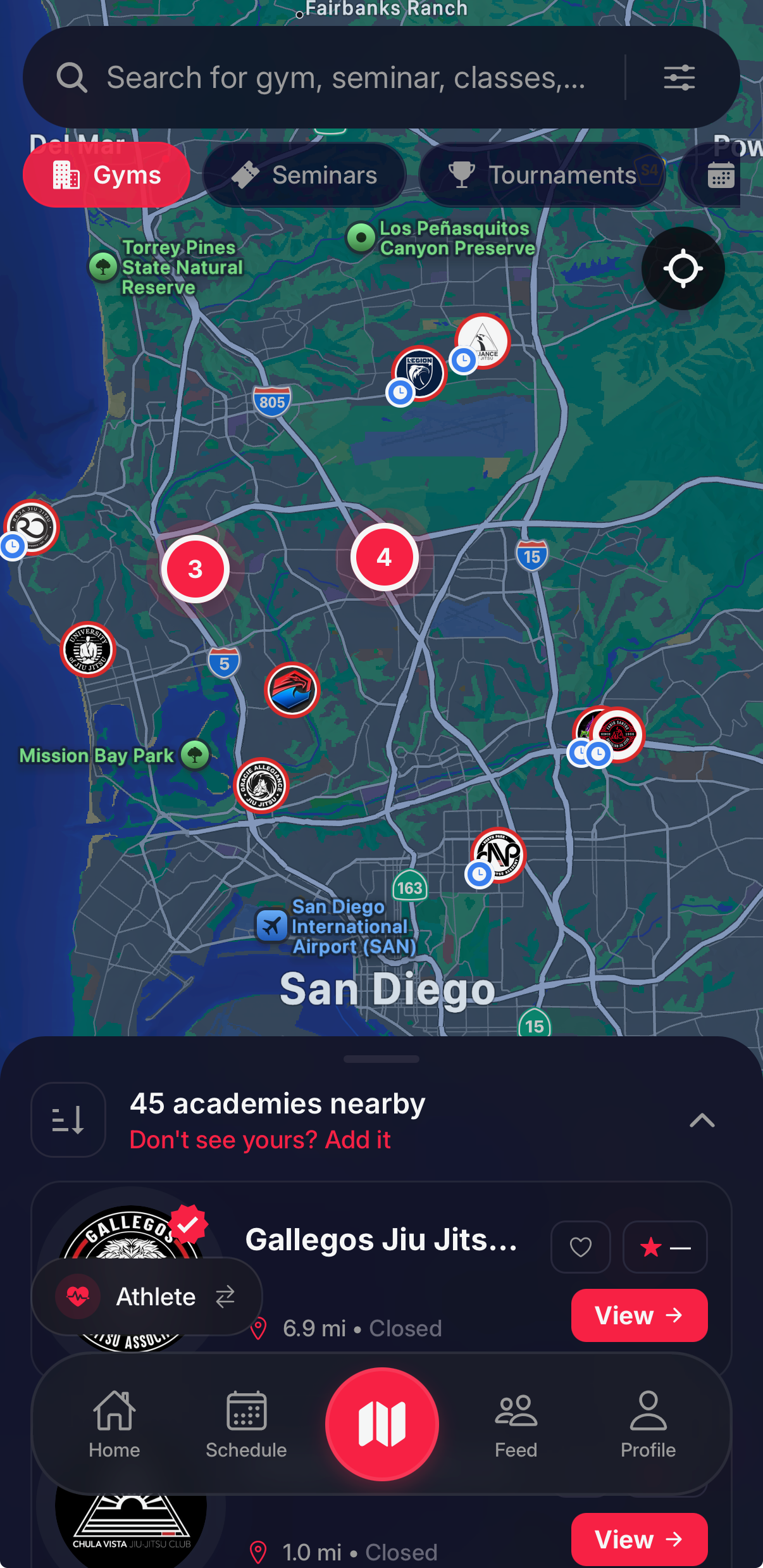
Tap In allows you to discover new academies in your area (or the area you’re visiting), contact them, find the right class, buy a drop-in pass, and even sign the waiver before you show up. It’s the all-in-one BJJ app that every student, coach, and athlete can benefit from to organize their BJJ life.
And the best part? It’s free.
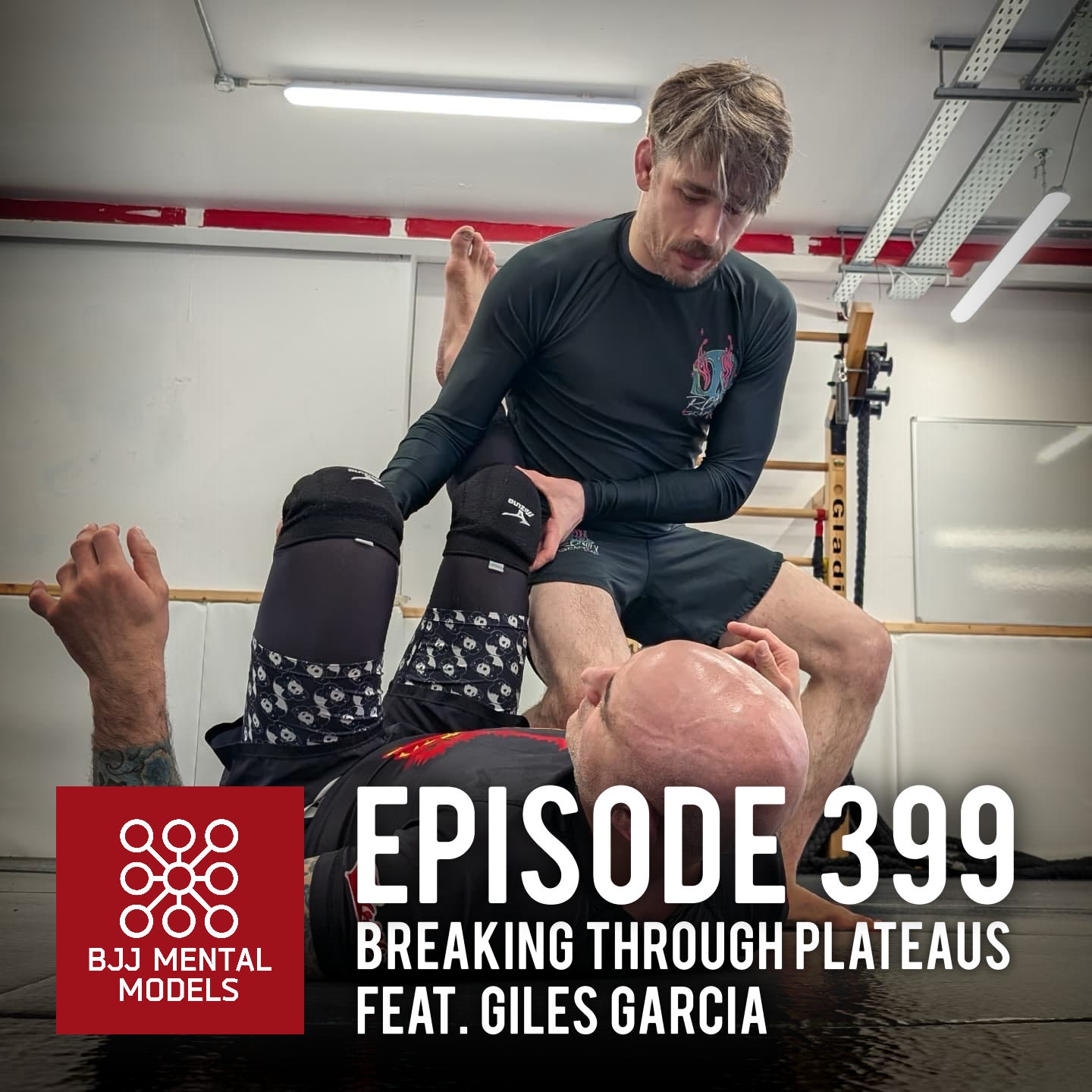
The Grappler’s Diary is sponsored by BJJ Mental Models, the world’s #1 jiu-jitsu education podcast!
In Episode 399, Giles Garcia from Ronin Grappling explains how to break through a plateau: name the specific problem hiding under the vague feeling, then shrink it to a micro battle you can win.
🛗 Your plateau might just be perspective: If everyone in your room is improving at the same rate, nobody feels like they’re getting better. That’s the elevator theory, and it takes a new training partner or a trip to another gym to get an honest benchmark.
📉 Your gains get smaller as you get better: You improve fastest when you know nothing, so the same effort at purple belt won’t produce the leap it did at white. Much of what gets called a plateau is a mismatch between expectations and reality.
🔍 Name the problem, or you can’t solve it: “My half guard is terrible” is not information. Keep asking what’s actually happening until you get to something specific enough to work on, like a knee shield that fails because you’ve stopped grip fighting.
🎯 Shrink the problem to a micro battle: Giles turned “I keep getting flattened” into “he’s getting both underhooks,” then set himself one or two small goals a session. He still got smashed plenty, but he could see progress because he’d made it measurable.
🤝 Ask the person who keeps tapping you: The training partner finishing you every round knows how he’s doing it, and you’re allowed to ask. Giles got much harder to catch in a head-and-arm choke by troubleshooting it with the black belt who kept hitting it on him.
🎧 Hit this link to listen now.
Also published this week:

Thank you for reading another edition of The Grappler’s Diary!
If you enjoyed reading this article, share it with friends! Or, click on the ❤️ button on this post so more people can discover it on Substack.